1. Introduction
Evaluating site-specific modifications to default approaches, scenarios and parameters for risk assessmentAn organized process used to describe and estimate the likelihood of adverse health outcomes from environmental exposures to chemicals. The four steps are hazard identification, dose-response assessment, exposure assessment, and risk characterization (Commission 1997a). relies on the professional judgmentDecisions made based on knowledge gained through education and experience. and technical experience of the project managers and others producing, reviewing, and using risk assessments to support decisions regarding site cleanupThe assessment and reduction, removal, or control of chemicals in environmental media. Cleanup is synonymous with other terms such as "corrective action" and "remediation" used in various state, local, and federal programs.. While many regulatory agencies responsible for the cleanup of chemicals released to the environment have adopted regulations, guidance and policies that define default approaches, scenarios and parameters as a starting point for risk assessment, project managers and decision makers are often faced with difficult technical issues when evaluating site-specific risk assessments. This document provides resources for project managers and decision makers to use when evaluating site-specific approaches, scenarios and parameters for risk assessment.
 Read more
Two ITRC studies (ITRC 2005; ITRC 2008) examined state site cleanup programs that incorporated risk assessment, the differences in these programs, and the effect of the differences on site cleanup decisions. The first study, Examination of Risk-Based Screening Values and Approaches of Selected States (ITRC 2005), found that “variability in each state’s basis and intended use of screening values” exists and that transparency is needed in the rationale for calculation and intended uses of the screening values. The study noted that in some cases the differences in screening values among states was minimal (with differences likely the result of rounding of values or other small differences in the input parameters), while in others the difference was greater than an order of magnitude, with differences not always apparent. The study further noted that some screening values are not risk based, but rather are based on other criteria such as background concentrations, laboratory detection limits, nuisance issues, historical values, or technology limits. The second study, Use of Risk Assessment in Management of Contaminated Sites (ITRC 2008), found that “the implementation of risk-based numerical criteria—the way in which the criteria are used in the field and in the management of contaminated sites via risk assessment—introduces orders of magnitude of variation in decision outcomes” (ITRC 2008). The study found that differences in sampling requirements, treatment of background concentrations, application of tiered approaches, site characterization requirements, and data interpretation and use all contributed to variability in the outcome of risk assessments and related decisions.
The variability in regulatory approaches may present difficulties for project managers and others associated with the site cleanup—especially when the risk assessment extends beyond default parameters and processes. These individuals must have sufficient background in and knowledge of the various default scenarios, input parameters, calculation processes, and alternatives in order to make informed decisions about site-specific risk assessments and site cleanup.
While many guidance documents and training programs related to risk assessment are available, project managers still face challenges when making decisions that involve site-specific risk assessment conclusions. This document provides project managers and others producing, reviewing, or relying on risk assessments with guidance to support consistent and effective site-specific risk assessment decisions for the cleanup of chemical contaminated sites.
This chapter provides an overview of the risk assessment process and touches on risk managementThe process of identifying, evaluating, selecting, and implementing actions to reduce risk to human health and to ecosystems. The goal of risk management is scientifically sound, cost-effective, integrated actions that reduce or prevent risks while taking into account social, cultural, ethical, political, and legal considerations (Commission 1997a)., stakeholder engagement, risk communicationRisk communication is the formal and informal process of communication among and between regulatory agencies and organizations responsible for site assessment and management, and the various parties who are potentially at risk from or are otherwise interested in the site., uncertaintyThe lack of perfect knowledge of values or parameters used in a risk assessment. Uncertainty may be reduced by collection of additional data., and ecological risk assessment. Chapter 2 discusses the use of risk assessment in site cleanup and explains different types of risk assessments such as forward and backward risk assessment calculations, tiered approaches, baseline risk assessments and deterministic/probabilistic risk assessments. Chapter 10 touches on tribal and public stakeholder perspectives and all references cited are included in Chapter 11.
The remainder of this document focuses on the following seven subjects:
- Planning (Chapter 3)
- Data Evaluation (Chapter 4)
- Toxicity (Chapter 5)
- Exposure Assessment (Chapter 6)
- Risk Characterization (Chapter 7)
- Risk Management (Chapter 8)
- Risk Communication (Chapter 9)
Key issues for using human health risk assessment to support risk management decisions about site cleanup are highlighted throughout this document. Each key issue is briefly defined, and one or more potential options for addressing the issue are provided. References to additional relevant information and tools are also provided. The options are not all inclusive; other options not listed here may also be available. The options are not listed in order of priority. In some instances, combining options may be applicable for a site.
This document is intended for state, local, and federal project managers and others producing, reviewing, or relying on risk assessments to support decisions regarding site cleanup. This document is also a useful tool for environmental practitioners, community members, and other stakeholdersA stakeholder is anyone who has a “stake” in the development, outcome or decisions made as a result of a risk assessment. A stakeholder can be a person, a group, or an organization that is either affected, potentially affected, or has any interest in the project or in the project’s outcome, either directly or indirectly (Commission1997a; Commission 1997b; NRC 1996; NRC 2009). (see Section 3.1) in understanding and using risk assessment information to make better environmental decisions. While this document is written for a broad audience of stakeholders with varying knowledge of risk assessment, it is assumed that readers are generally familiar with the risk assessment process.
1.1 Overview of Risk Assessment
Human health risk assessment is the process of characterizing the nature and magnitude of health risks (for example, cancer, birth defects, or liver disease) to humans from chemicals and other stressors that may be present in the environment (USEPA 2012c). Risk assessment is an integral component of risk management (see Section 1.2) that provides a scientific and defensible rationale to support decisions for the protection of human health and the environment. Risk assessment is interconnected with risk communication (see Section 1.4) and other components within the interactive process for risk management decision making. This interconnected and iterative process, along with a typical framework for risk assessment, is shown in Figure 1-1.
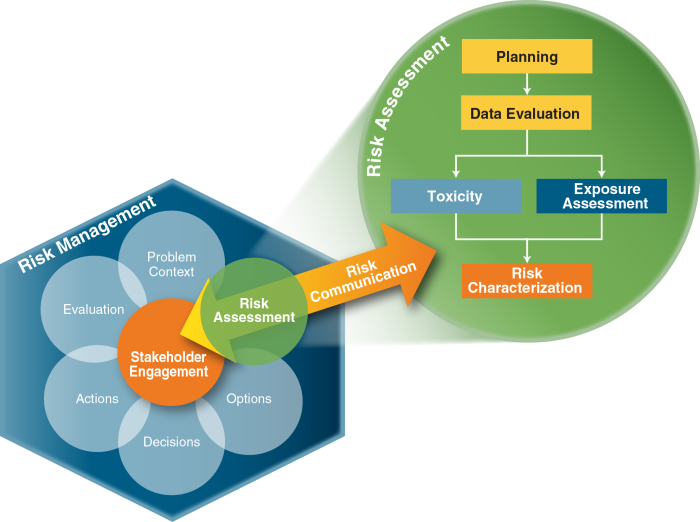
Figure 1-1. Typical framework for risk assessment.
Source: Adapted from Commission 1997a.
Read moreA human health risk assessment addresses four questions:
- What are the potential adverse effects on human health (cancer and noncancer) from exposureContact of a receptor with a chemical. Exposure is quantified as the amount of the chemical available at the exchange boundaries of the organism (for example, skin, lungs, gut) and available for absorption (USEPA 1989a). to a chemical present in environmental media?
- What is the concentration of a chemical in environmental media to which a person will be exposed?
- How much contact will a person have with a chemical in environmental media?
- What is the relationship between concentrations of a chemical in environmental media and the incidence or severity of potential adverse human health effectsTypically defined as an incremental lifetime cancer risk (for example, exceeding a range of 1E-4 to 1E-6) or a hazard quotient or hazard index (for example, one).?
Note that these four questions do not assume that the presence alone of a chemical in environmental media necessarily poses a risk to human health. The risk assessment seeks to quantify whether concentrations present in the environment have the potential to pose an unacceptable risk to human health and to provide information to support decisions to mitigate, reduce, or eliminate unacceptable risk.
The complexity of a risk assessment may vary, and a detailed, site-specific risk assessment may not always be warranted. In some cases, a screening-level risk assessment using regulatory default information (for example, default exposure scenarios and exposure factors) may be sufficient. In either case, incorporating risk assessment into a cleanup project requires proper planning (Chapter 3) to define the scope, the technical approach (Chapter 2), and the conceptual site modelDescribes the potential chemical sources, release mechanisms, fate and transport pathways, impacted environmental media, receptors, and exposure pathways for current and reasonably anticipated future activities and land uses. This model documents current site conditions and serves to conceptualize the relationship between chemicals in environmental media, sources, and receptors through consideration of potential or actual migration and exposure pathways (ITRC 2012a). (CSM) for the risk assessment. The plan should be based on an understanding of the risk management goals (Chapter 8) and the need for communication (Chapter 9) with and between those involved in or affected by the risk assessment. The plan includes the development of a data collection program (Chapter 3) to identify the data to be collected and the quantity and quality of data appropriate for the risk assessment. The goal of data collection is to characterize the current or reasonably anticipated future exposures to support risk management decisions (Chapter 4).
The process of estimating risk consists of three primary steps: toxicity assessmentThe combination of the hazard identification and the dose response assessment. (both hazard identificationThe process of determining whether exposure to a chemical in environmental media by a receptor can cause an increase in the incidence of an adverse human health effect (for example, incremental lifetime cancer risk) (USEPA 2012b). and dose-response assessmentThe relationship between exposure level (amount of chemical in an environmental media that is inhaled, absorbed, or ingested by a receptor) and the incidence of adverse effects (adapted from Commission 1997a).), exposure assessmentThe determination or estimation (qualitative or quantitative) of the magnitude, frequency, duration, and route of exposure (USEPA 1989a)., and risk characterizationThe risk characterization integrates information from the preceding components of the risk assessment and synthesizes an overall conclusion about risk that is complete, informative and useful for decision makers (USEPA 2000c). (Figure 1-2). Based on data analysis, a toxicity assessment (Chapter 5) is conducted to identify the potential hazard and toxicity associated with chemicals in environmental media. An exposure assessment (Chapter 6) is conducted to evaluate the mobility and exposure pointA location of potential contact between a receptor and a chemical (USEPA 1989a). concentration (EPC) of chemicals in environmental media and identify exposure pathways and receptors. Information from the toxicity assessment and exposure assessment are combined in the risk characterization (Chapter 7) to estimate and describe the potential human health risk associated with exposure to chemicals in environmental media. These steps are discussed in more detail in Section 1.1.1, Section 1.1.2, and Section 1.1.3. The results of the risk assessment support risk management decisions that protect human health (Chapter 8).
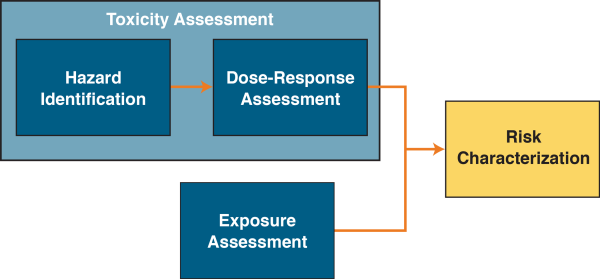
Figure 1-2. The process of estimating risk.
Source: Adapted from USEPA Human Health Risk Assessment (USEPA 2012c).
1.1.1 Toxicity Assessment
Toxicity assessment (Chapter 5) involves two steps: hazard identification and dose-response assessment. Hazard identification is the process of determining whether exposures to a chemical can cause an increase in the incidence of an adverse human health effect (for example, cancer, birth defects, or liver disease). Dose-response assessment is the process of quantifying the relationship between the degree of exposure to the chemical and incidence or severity of adverse human health effects (USEPA 1989a). Toxicity assessment considers types of adverse human health effects associated with exposure to a chemical, relationships between the magnitude of exposure and adverse human health effects, and related uncertainties (USEPA 1989a).
The toxicity assessment results in a list of chemicals and toxicity valuesDerived values (for example, reference doses and slope factors) that can be used to estimate the incidence or potential for adverse human health effects in receptor (USEPA 2015h). (for example, a reference dose [RfD] or cancer slope factorAn upper bound, approximating a 95% confidence limit, on the increased cancer risk from a lifetime exposure to an agent. This estimate, usually expressed in units of proportion (of a population) affected per mg/kg-day, is generally reserved for use in the low-dose region of the dose-response relationship, that is, for exposures corresponding to risks less than 1 in 100 (USEPA 2013).) that express the toxicity of a specific chemical. The toxicity value incorporates the findings of the hazard and dose-response assessments with safety factors to address uncertainties. This value also provides information about data quality, such as the weight of evidence of a particular chemical's carcinogenicity in humans. Toxicity assessments may conclude that a toxicity value cannot be developed because of inadequate or insufficient data.
1.1.2 Exposure Assessment
Exposure assessment (Chapter 6) quantifies the magnitude, frequency, and duration of actual or potential human exposure to chemicals in environmental media, as well as associated variabilityA population’s natural heterogeneity or diversity, particularly that which contributes to differences in exposure levels or in susceptibility to the effects of chemical exposures (Commission 1997a). For example, workers may perform different functions that may affect time, frequency, and duration of contact with an environmental medium). Variability cannot be reduced by collection of additional data. and uncertainty (USEPA 1989a). The objective is to provide a supported, quantitative estimate of exposure that is protective of human health based on site characterization data, CSMs, and receptorAn individual (for example, residential adult, residential child, worker, trespasser, or recreator) who has the potential to be exposed to a chemical in environmental media. activity patternsThe activity or activities in which the receptor is assumed to be engaged involving details regarding where they are, when they were there, how long they were there, and over what area.. This information is used to estimate potential risks for receptors and subsequent risk management decisions.
Exposure assessment includes the following activities (see Figure 1-3):
- Characterizing exposure setting. The exposure setting is characterized with respect to physical aspects of the site including topography, climate, vegetation, and groundwater hydrology. Current and potential receptors are also identified and characteristics that influence their exposure are described, such as their location relative to the site, activity patterns, presence of sensitive subpopulations, and reasonably anticipated activities and land uses (USEPA 1989a; USEPA 1995e). This process begins during the planning stage of the risk assessment with the development of the CSM.
- Identifying exposure pathways. The exposure pathways (see Section 3.2) describe specific mechanisms by which humans could be exposed to chemicals at or originating from a site. Identifying the exposure pathways considers information that includes sources, releases, types and locations of chemicals, environmental media, chemical fate and transport, as well as location, proximity, and activities of receptor populations. Routes of exposure (ingestion, dermal contact, and inhalation) and exposure areas are identified for each exposure pathwayThe course a chemical takes from a source to a receptor. An exposure pathway describes a unique mechanism by which an individual or population is exposed to chemicals at or originating from a site. Each exposure pathway includes a source or release from a source, an exposure point, and an exposure route. If the exposure point differs from the source, a transport/exposure medium (for example, air) or media (in cases of intermedia transfer) also is included (USEPA 1989a).. This process also begins during the planning stage of the risk assessment with the development of the CSM.
- Quantifying exposure. Exposure is quantified (see Section 6.2) by estimating magnitude, frequency, and duration of exposure for each pathway (estimating exposure concentrations and quantifying intakes). These estimates are conservative but within a realistic range of exposure for each exposure pathway for each receptor.

Figure 1-3. The exposure assessment process.
Source: USEPA 1989a.
Exposure assessments are usually performed for two sets of conditions: (1) conditions based on current chemical concentrations and chemical distributionA distribution describes the probability or likelihood of any potential value. in environmental media along with current on-site and off-site land use; and (2) conditions based on predicted future concentrations and distribution along with reasonably anticipated future land use. Exposure estimates for the current land uses are used to determine whether immediate action or interim measures are needed to mitigate existing and ongoing exposures. Exposure estimates for the reasonably anticipated future land use are used to determine whether remedial action is needed for long-term protection at a site (USEPA 1989a).
1.1.3 Risk Characterization
Risk characterization (Chapter 7) is the final step of the human health risk assessment process. This step combines the results of the exposure assessment (magnitude, frequency, and duration of exposure) and toxicity assessment (toxicity value) to provide a quantitative estimate of risk (for example, incremental excess lifetime cancer risk). Along with the quantitative estimate of risk, a qualitative narrative is produced (for example, a description of potentially sensitive populations). The narrative describes the key assumptions, professional judgments, estimates of uncertainties, and other issues and questions that were identified and resolved during the risk assessment. This discussion also provides information that can be used to communicate potential risks and remedial action decisions to interested parties.
The following resources offer additional information on risk characterization:
- Risk Characterization Handbook (USEPA 2000b)
- Guidance for Risk Characterization (USEPA 1995c)
- Elements to Consider When Drafting USEPA Risk Characterizations (USEPA 1995b)
- Risk Assessment Guidance for Superfund (RAGS) (USEPA 1989a; USEPA 1991c; USEPA 1991b; USEPA 2004b; USEPA 2009a)
Chapter 7 provides guidance on key issues associated with risk characterization.
1.2 Risk Management
The Presidential/Congressional Commission on Risk Assessment and Risk Management (Commission 1997a) described an iterative and interactive framework for risk management consisting of six stages, with risk communication as an important component of all stages. This framework is shown in Figure 1-1 with the concepts summarized below:
- Problem Context - Define the problem and put it into context.
- Risk Assessment - Analyze risks associated with the problem.
- Options - Examine the options available to address the risks.
- Decisions - Decide which options will reduce or prevent risks.
- Actions - Act on the decisions.
- Evaluation - Evaluate the action taken.
- Risk Communication - Collaborate with and involve stakeholders early.
Essentially, risk management (Chapter 8) defines the problem to be addressed by the risk assessment, provides guidance for the risk assessment, and selects and implements scientific and defensible actions to protect human health in compliance with applicable laws. These actions rely on an understanding and consideration of the potential for people to be harmed as identified in the risk assessment (Commission 1997a), along with other issues that may be relevant to stakeholders (for example, environmental, social, cultural, political, and economic issues).
Read moreIn the context of contaminated site cleanup, the risk management process is implemented through various mechanisms that may include statutes, regulations, policies, guidelines, and regulatory decision making. These mechanisms can define the objectives, processes, and parameters that affect a risk assessment and the decision criteria affecting actions to be taken as a result of the risk assessment. Approaches to risk management for the cleanup of contaminated sites vary by state due to differences among the states that include the legal basis and framework for risk management, regulatory policy structure, technical approaches, decision making practices, and political factors (ITRC 2008). Given these differences, the specific regulatory framework within which the project is being conducted and its effect on the risk assessment, particularly at the beginning of the project, must be understood so that both the investigation and the risk assessment meet the risk management goals and expectations of the stakeholders (NRC 1983).
Risk management decisions should consider the views of those stakeholders affected by the decision along with the following factors (Commission 1997a; Commission 1997b):
- best available technical information, including an “analysis of the weight of scientific evidence that supports conclusions about a problem’s potential risks to human health” (Commission 1997a)
- sensitivity to political, social, legal, and cultural considerations
- examination of a range of legal, regulatory, and nonregulatory risk management options
- feasibility, with benefits reasonably related to their costs
- alternatives to command-and-control regulation, including incentives for innovation, evaluation, and research
- ability to be implemented effectively, expeditiously, flexibly, and with stakeholder support
Overall, risk management involves making choices in regard to overall risks associated with chemicals in environmental media to determine appropriate actions considering environmental, social, cultural, political, and economic factors (Commission 1997a). Chapter 8 identifies key issues associated with risk management and provides insight on some of the challenges faced by project managers and others associated with risk assessment.
1.3 Stakeholder Engagement
A stakeholder is anyone who is affected by or can affect the development, outcome, or decisions made as a result of a risk assessment. Stakeholders can include individuals or organizations who conduct or oversee cleanup activities as well as those who may be affected by or who may influence the decisions. Depending on the site, stakeholders may include state regulatory agencies, federal regulatory agencies, Native American tribes, individuals, elected officials, or organizations representing local communities, and regulated parties.
Stakeholder engagement is the practice of involving stakeholders throughout a risk assessment project. Stakeholders can offer expertise, expectations, and requirements important to the development and oversight of the risk assessment and the decisions making process. Engagement of the stakeholders can be critical to the acceptance of a risk assessment, particularly since lack of communication often increases stakeholder concerns. An example of potential stakeholders is shown in Figure 1-4. In some cases, an individual or a group may represent multiple stakeholders (for example, the regulatory agency may also be the project managerAn individual from a regulatory agency (for example, federal, state, or local), or a consulting company, or responsible party company, who is coordinating the site cleanup including the risk assessment. or the responsible party may also be the property owner).
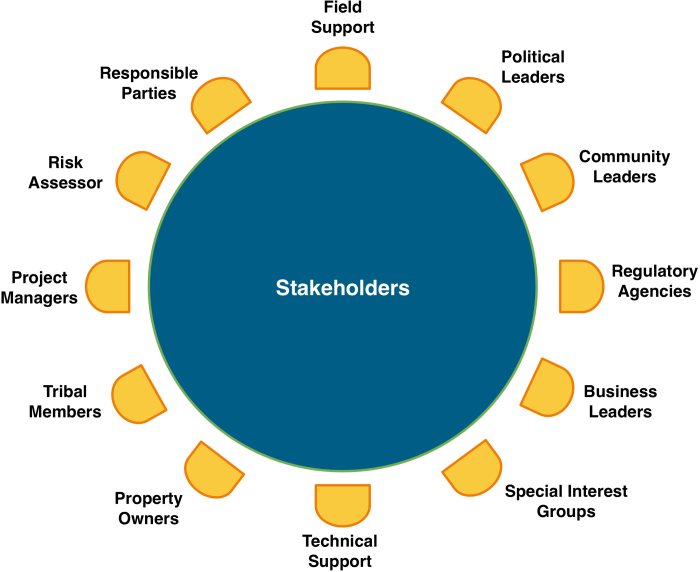
Figure 1-4. Example stakeholders in the risk communication process.
1.4 Risk Communication
To effectively engage stakeholders in the decision-making process, there must be a common understanding of what potential risks are associated with exposure to chemical releases and the assumptions made to calculate the potential risks (for example, who are the receptors? what is the use of the land considered?). This common understanding is the basis of the conversations that will eventually lead to reaching transparent risk management decisions.
Read moreRisk communication includes formal and informal communication among organizations responsible for site cleanup, as well as among the parties potentially at risk from or otherwise interested in the site. Project managers and others associated with risk assessment must communicate with various audiences about risks in order to learn about patterns of exposure, gain an understanding of the different perceptions about risk, and describe risks and uncertainties openly and clearly (Commission 1997a). Risk communication, therefore, is an ongoing interaction in all phases of risk management (see Figure 1-1) to solicit and exchange information and share results among stakeholders. With good risk communication, all those involved or affected by the decisions share a common understanding of the processes and assumptions used in risk assessment and of the objective and scope of alternatives for risk management decisions. With this understanding, stakeholders can develop a scientifically informed opinion and participate in site decisions (USEPA 2007e).
Chapter 9 highlights common problems and issues encountered in risk communication for risk assessments. Although Chapter 9 provides some examples on how to communicate the results of a risk assessment, the examples are intended to be illustrative and should be modified as necessary. This chapter also provides sources for guidance on the “how to” of risk communication.
1.5 Variability and Uncertainty
Variability and uncertainty are inherent in the risk assessment process. “Variability and uncertainty have the potential to result in overestimates or underestimates of the predicted risk” (USEPA 2014j). It is important to specify the key variabilities and uncertainties in the risk assessment in order to place the risk estimates in proper perspective for the risk manager and for risk communication. The level of effort needed for the evaluation of variability and uncertainty will vary by project depending on the scope of the assessment and the resources available (USEPA 1995c).
Read moreVariability arises from true heterogeneity in characteristics such as dose-response differences within a population, or differences in concentrations of chemicals in the environment (USEPA 1995c). The USEPA lists four types of variability (USEPA 2011c):
- Spatial or variability across locations. For example, fish intakes rates may vary depending on the region of the country, and exposure may vary depending on proximity to a source.
- Temporal or variability over time, including both short-term and long-term time frames. For example, personal activities vary daily, and some chemicals degrade or break down over time.
- Intra-individual or variability within an individual. For example, water ingestion rates for a single person may vary day by day and height and weight may change over time.
- Inter-individual or variability among individuals. For example, inhalation rates vary both by age and level of activity and individuals vary on factors such as predisposition to diseases and other medical conditions.
Agencies often address variability by use of central tendency and reasonable maximum exposureThe highest exposure that is reasonably expected to occur at a site (USEPA 1989a). (RME) assumptions (for example, default exposure parameters and upper confidence limits [UCLs] on average exposure concentrations). Probabilistic risk assessment, which evaluates data distributions rather than using a single value for each input parameter, can also be used to address variability.
Uncertainty represents lack of knowledge about factors such as adverse effects or concentrations of chemicals in environmental media (USEPA 1995c). The difference between uncertainty and variability is that uncertainty can be reduced with additional study. Variability is inherent among individuals; it cannot be reduced with additional investigation, only better understood or characterized.
Common sources of uncertainty in risk assessment include:
- scientific measurements
- environmental sampling
- dose-response models
- exposure assumptions
- models of environmental fate and transport
- data gapsMissing data or information needed to answer questions or allow a more refined analysis to be completed.
A sensitivity analysis can be used to determine which parameters/assumptions have the most influence on the risk assessment conclusion and whether further information would sufficiently decrease the uncertainty in the outcome (see Appendix A of USEPA's guidance [2001c] for additional information on sensitivity analysis). Examples of measures that can be taken to reduce uncertainty include an unbiased sampling design or use of a more sophisticated modeling tool. Probabilistic techniques can also be used to address uncertainty. Since it is difficult to eliminate uncertainty, professional judgment must be used.
Variability and uncertainty can both be present in some of the risk assessment parameters/assumptions. For example, soil ingestion rate varies with age and individual, but estimates of soil ingestion are also inherently uncertain because it is a difficult exposure parameter to measure.
Variability and uncertainty associated with any decision-making process can be a source of concern among public and tribal stakeholders. All risk assessments incorporate variability and uncertainty and it is important to understand whether these result in estimates of risk that meet the overall risk management goals. The risk assessment should also provide sufficient information so that the stakeholders can understand and accept the variability and uncertainty in the risk assessment. Variability and uncertainty associated with risk assessment is discussed in the related topics presented in this document.
Further discussion of variability and uncertainty in risk assessment can be found in the following documents:
- Probabilistic Risk Assessment to Inform Decision Making: Frequently Asked Questions (USEPA 2014j)
- Exposure Factor Handbook: 2011 Version. Chapter 2, Variability and Uncertainty (USEPA 2011c)
- Risk Assessment Principles and Practices. Office of Science Advisor Staff Paper (USEPA 2004a)
- Guidance for Risk Characterization (USEPA 1995c)
1.6 Ecological Risk Assessment
Ecological risk assessment is a scientific evaluation of the potential for harm to occur to ecological receptors as a result of exposure to some stressor such as a chemical in environmental media. Human health and ecological risk assessments are distinct processes; however, they share some commonality and interconnection. This document focuses on human health risk assessment, but ecological risk assessment is also a consideration within the overall risk assessment process. Information concerning ecological risk assessment can be found in the following guidance documents:
- Risk Assessment Guidance for Superfund, Volume 2: Environmental Evaluation Manual (USEPA 1989b).
- Framework for Ecological Risk Assessment (USEPA 1992b).
- Guidelines for Ecological Risk Assessment (USEPA 1995d).
- ECO Update: Ecological Assessment of Superfund Sites: An Overview, Vol. 1, Number 2 (USEPA 1991a)
- Guidance for Ecological Risk Assessments at Hazardous Waste Sites and Permitted Facilities (DTSC 1996).
- Ecological Risk Assessment Guidance for Superfund: Process for Designing and Conducting Ecological Risk Assessments – Interim Final (USEPA 1997a)
1.7 Resources and Tools
The following resources and tools were not cited in the sections above and are included here for further information.
Human Health Risk Assessment Web Page (USEPA 2012c)
Public Health Assessment Guidance Manual (Update) (ATSDR 2005)
Risk Assessment Guidance for Superfund: Volume I - Human Health Evaluation Manual (Part A) (USEPA 1989a).
Risk Assessment Guidance for Superfund: Volume I - Human Health Evaluation Manual (Part B, Development of Risk-based Preliminary Remediation Goals) (USEPA 1991b).
Risk Assessment Guidance for Superfund: Volume I - Human Health Evaluation Manual (Part C, Risk Evaluation of Remedial Alternatives) (USEPA 1991c).
Risk Assessment Guidance for Superfund: Volume I - Human Health Evaluation Manual (Part D, Standardized Planning, Reporting, and Review of Superfund Risk Assessments) (USEPA 2001d).
Risk Assessment Guidance for Superfund: Volume I - Human Health Evaluation Manual (Part E, Supplemental Guidance for Dermal Risk Assessment (Final) (USEPA 2004b).
Risk Assessment Guidance for Superfund: Volume I - Human Health Evaluation Manual (Part F, Supplemental Guidance for Inhalation Risk Assessment (Final) (USEPA 2009a).
Risk Assessment Guidance for Superfund Volume I: Human Health Evaluation Manual Supplemental Guidance Standard Default Exposure Factors (USEPA 1991d)
Risk Assessment Guidance for Superfund: Volume III – Part A. Process for Conducting Probabilistic Risk Assessment (USEPA 2001c)
Supplemental Guidance to RAGS: Calculating the Concentration Term (USEPA 1992d).
Exposure Factor Handbook: 2011 Version (USEPA 2011c).
Publication Date: January 2015